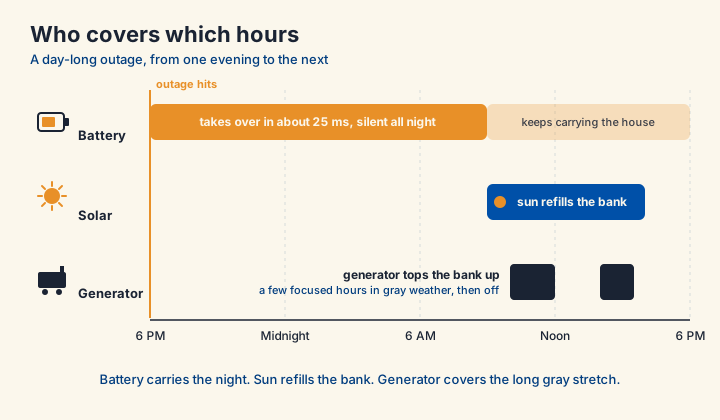
You do not have to pick a side. A battery bank covers the daily work of an outage: it takes over the instant the grid drops, it runs silently all night, and the solar array refills it the next day. A generator covers the part a battery cannot: the long gray stretch after a storm, when the sun disappears for days and the bank needs help. In a two-week grid-down, the pair beats either one alone.
Every June the same two questions come across the counter. Somebody with a standby generator asks whether batteries are worth it. Somebody pricing batteries asks whether they can skip the generator. Both are really asking the same thing: which machine does which job? So let's split the jobs up.
What each machine is actually good at
A battery does its best work in the first seconds and the everyday hours of an outage. The handoff is fast enough that the clocks do not blink; on our whole-home builds the GridBOSS spec sheet lists a transfer time of about 25 milliseconds. It makes no noise at 2 AM. It burns no fuel. The panels recharge it every day the sun comes up. Its limit is capacity. A bank holds what it holds, and a week of storm cloud can drain it faster than the array refills it.
A generator's whole trick is fuel. As long as you can feed it, it makes power, which is what makes it the deep reserve. The trade-offs are the ones you already know from the neighborhood after a storm: noise, exhaust, oil changes, and the gas-station line everybody joins at once. It also does not run itself. A portable wants you outside in the rain pulling a cord, and every hour of runtime costs fuel whether the house needs 400W or 4,000W that hour.
The three ways this goes
Generator only. This is most of the panhandle today. It works, and it is honest work, but the generator carries every hour of the outage alone. It runs all night to keep one fridge cold, sipping fuel to hold up a tiny load. Two weeks of that is a lot of gas cans and a lot of noise.
Battery only. With solar on the roof, this covers the common case well. Short outages pass without you noticing, and a sunny-week outage can roll on for days because the array refills the bank each afternoon. The gap is the long overcast run after a hurricane, which is exactly when outages last longest. Production drops, the bank drains faster than it refills, and there is no plan B.
Both. The battery carries the house, quiet and instant, around the clock. When the gray stretch drags on and the bank runs low, the generator runs a few hours, working hard at an efficient load, tops the bank up, and shuts off. You get silence most of the day and a reserve that lasts as long as your fuel. This is where people who have actually been through a two-week outage usually land, and it matches what we see on real jobs here.
How they tie together
Two architectures, depending on the build. No wiring here, just the shape of it.
On a hybrid build, the kind behind our whole-home backup and critical-load backup systems, the GridBOSS is the traffic cop at the service entrance, and it has a dedicated generator input on board, rated on the spec sheet for up to 125A at 120/240V. The generator lands on that input and the system manages when it contributes. The transfer-switch job happens inside the box, so there is no separate switch bolted to the wall.
On an off-grid build around the 12000XP, the tie-in is the ChargeVerter, and it is already in our off-grid kit. Its job is simple: take the generator's output and turn it into charging for the battery bank. The generator never carries the house directly. It refills the tank while the inverter keeps doing its job. The generator itself is not in the kit; you bring the one you own or pick one up locally.
What it means for your build
Buy the battery for comfort and the generator for insurance, in that order. The battery is the half you use in every single outage, so size it to the loads you actually want covered overnight: fridge, freezer, lights, fans, internet, maybe a window of AC. The generator's job shrinks once a battery is in the picture. It no longer has to carry the whole house at its worst moment. It only has to recharge the bank, so a modest unit doing a few focused hours of work replaces a big one idling all day. Run your numbers in the builder and see what the battery half looks like before you spend another dollar on the fuel half.
Good fit, bad fit
Good fit: a hurricane-zone homeowner who wants outages handled without babysitting, an off-grid home that has to get through winter gray spells, anyone who already owns a generator and is tired of living on it during storm season. It also suits a freezer full of food you would rather not gamble on.
Bad fit: if your outages last a few minutes a few times a year, a battery alone will probably never leave you wanting, and the generator can wait. And if storing and rotating fuel is never going to happen at your house, be honest about that. A generator with stale gas in it is lawn art. Start with the battery half from the shop and add the generator side later; the hardware already supports it.
What Ape Solar would check first
Three things, before anyone recommends hardware.
First, your real loads. The power bill plus a list of what has to stay on tells us how big the bank needs to be and how hard a generator would ever have to work.
Second, which architecture you are on. Grid-tied hybrid points to the GridBOSS generator input. Off-grid points to the ChargeVerter. The system decides the right tie-in, and it is cleaner to know that before the first part ships.
Third, the generator you already own. Whether a specific unit plays well depends on its output and the quality of the power it makes, and some units are a better match than others. We would rather read the spec plate off a photo up front than find out during a storm.
Safety note
Any connection between a generator and a house is licensed-electrician work. That covers transfer equipment, the service-entrance connection, the generator inlet, and the permit and inspection your local AHJ requires. Ape Solar designs the system, supplies the gear, and runs the project; a state-licensed contractor makes those connections. In the Florida panhandle that is how our pro install works. Never improvise a generator hookup. The shortcuts you may have heard about endanger you and the line workers getting your grid back up.
FAQ
I already have a generator. Do I still need a battery?
Need is your call. The honest answer is that they cover different hours. A generator cannot match the battery's instant, silent, fuel-free coverage of everyday outages, and running one all night to hold up a fridge is an expensive way to sleep badly. Owners who add a battery end up running the generator far less, and at a load it is happy at.
I have batteries and solar. Do I still need a generator?
For short outages, no. The question is the long overcast stretch after a major storm, when solar production drops for days at a time. A modest generator is cheap insurance against exactly that week. If outages in your area are rare and brief, skip it now and add it later if a season changes your mind.
Can my existing generator charge the battery bank? A Generac on a pad, a portable in the garage?
Often, yes. That is the whole point of the tie-in gear. It depends on the unit's output and the quality of the power it produces, so we do not promise a specific model works until we have looked at its specs. Send us the make and model and we will tell you what we see.
How does the generator actually connect to the system?
At the architecture level: on hybrid builds it lands on the GridBOSS's built-in generator input, rated up to 125A on the spec sheet. On off-grid 12000XP builds it feeds the ChargeVerter, which charges the bank. Either way, the physical hookup is a licensed electrician's job, permitted through your local AHJ.
How big a generator do I need?
Smaller than you think, once a battery is in the system. It only has to recharge the bank, and it never has to carry your peak loads. The right size falls out of your bank size and loads, and we can work it out with real numbers.