Yes, almost always. A battery retrofit is a routine job on most installer-built systems, and the panels stay right where they are. The real question is which of two shapes the retrofit takes, DC-coupled or AC-coupled, and your existing inverter decides most of that.
Why your solar quits when the grid does
Most people start asking this question the same way. A storm rolls through, the grid drops, the sun comes back out the next morning, and the roof full of solar does absolutely nothing. That is by design. A grid-tie inverter is required by its safety listing to shut down the instant the grid fails, so it never pushes power onto a line a utility crew is repairing.
A battery changes the math. With storage and the right equipment at the service entrance, the house can disconnect from the grid cleanly and run as its own small island until the utility comes back. Getting there from a system somebody else built is a known job, and it comes in two shapes.
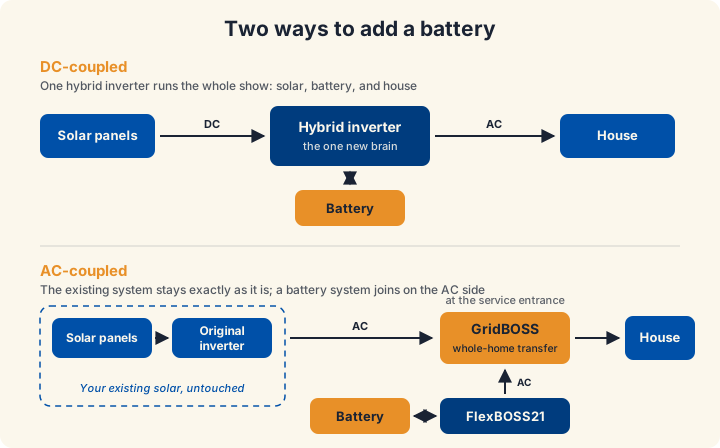
Shape one: DC-coupled
A hybrid inverter joins the system, or replaces your original inverter outright. Your panels feed it the same DC power they have made all along, the hybrid charges the battery directly from that DC, and one brain runs the whole show: solar, storage, and the house.
This is the tidy option. Fewer boxes, one monitoring app, no power converted back and forth more times than it needs to be. The trade is that your original inverter usually retires, which stings if it is three years old and working fine. And it does not fit every system. A microinverter array turns its power into AC on the roof, panel by panel, so there is no central DC feed to hand over to a hybrid.
Shape two: AC-coupled
Your existing solar stays exactly as it is. Panels, inverter, wiring, the monitoring app you already know, all untouched. A battery system with its own inverter joins on the AC side of the house instead. The old system keeps making power the way it always has, the new inverter charges the batteries from that output, and when the grid drops, the new equipment carries the house.
This is why AC coupling is the default retrofit conversation for the systems installers built by the thousands over the last decade, the Enphase microinverter arrays and the SolarEdge systems. Nothing about a healthy, paid-for array needs to change. The storage shows up alongside it.
The EG4 retrofit path
The EG4 version of that second shape is a FlexBOSS21 hybrid inverter paired with a GridBOSS at the service entrance. EG4's spec sheet describes the GridBOSS as a microgrid interconnect device that gives the house a single point of connection for the utility, up to three EG4 hybrid inverters, a generator, smart loads, and AC-coupled inverters. That last item is the retrofit hook. The box is built to accept the output of an AC-coupled system, which is what your existing grid-tie solar becomes in this arrangement.
The FlexBOSS21 runs the batteries and makes power when the grid is gone. The GridBOSS manages the whole-home transfer, switching the house over in about 25 milliseconds per the spec sheet, fast enough that the clocks do not blink. It is the same pairing at the heart of our Whole-Home Backup kit, and a retrofit lands the same gear next to gear you already own.
One honest line before anyone gets excited: whether your specific existing inverter plays well with that arrangement is a design-review question. It gets checked model by model, against the manufacturer documentation, before anything is quoted. Capability on a spec sheet and compatibility with your exact roof are two different claims, and we only make the first one from here.
What decides the shape
The age and health of your existing gear comes first. A string inverter near the end of its warranty tips the answer toward DC-coupled, because a hybrid replacing it solves two problems with one box. A young microinverter system tips hard toward AC-coupled, because retiring healthy equipment is money down the drain.
The paperwork matters just as much. Adding storage changes your interconnection agreement with the utility in most territories, and in Florida the terms depend on your specific utility's tariff, so the agreement gets reviewed before the design is final, never after.
And ownership decides everything. If the array is leased or under a power purchase agreement, it is not yours to modify. The lease company owns the equipment on your roof, and any retrofit starts with their sign-off or it does not start.
All of it together is engineering-review territory. This is exactly the kind of job Ape Solar designs and a licensed contractor executes, because a retrofit touches the service entrance, the interconnection agreement, and somebody else's original work all at once.
Good fit, bad fit
A good fit looks like this: a healthy grid-tie system you own outright, a real outage problem, and a budget for storage. The panels keep earning their net metering credit on sunny days and the batteries pick up the nights and the storms. That customer gets a lot of system for the money, because the array is already bought.
A bad fit is a leased system, full stop, until the lease company says otherwise. And sometimes the honest answer is that a retrofit is the wrong buy. If the existing inverter is failing and the panels are twenty years old and tired, patching a battery onto it can cost more than it returns, and a fresh hybrid system may be the sharper purchase. We will run both numbers and say which one we would pick.
What Ape Solar would check first
The existing inverter's make, model, and age, which a photo of the nameplate settles in a minute. The service panel and meter setup, since the whole-home path is built around a standard 200A residential service. The interconnection agreement and which utility holds it. And the plain question under all of it: what do you actually want to stay on when the grid drops, the whole house or a short list?
The safety note
Everything in this shape of work lands at or near your service entrance, and that is a licensed electrician's territory, period. Ape Solar designs the system and runs the project, a state-licensed contractor performs the work and pulls the permit, your utility has to approve the amended interconnection, and your local inspector, the AHJ, gets the final say on the design. Nothing in this guide is install guidance. It is a map of the decision, so the quote makes sense when it arrives.
FAQ
Do my panels have to come off the roof?
No. Both retrofit shapes leave the array where it is. The work happens at the inverter and the service entrance, on the ground.
Can I keep my Enphase or SolarEdge system?
Often, and that is the whole point of the AC-coupled shape. Whether your exact model fits the new equipment is what the design review checks, so the answer for your house comes from that review, never from a blog post.
Will a battery change my net metering?
It can. In Florida, adding storage usually means amending your interconnection agreement, and the terms depend on your utility's tariff. That review happens during design, so there are no surprises on the first bill after.
My system is leased. Can I add a battery?
Not on your own. The lease company owns the array, and a retrofit needs their written sign-off before any design work starts. Plenty of leases do not allow modification at all.
Do I need a GridBOSS?
For whole-home backup on the EG4 path, yes, it is the box that manages the transfer at your 200A service. A smaller retrofit that only backs up a short list of circuits can take a different, cheaper shape, and we will say so when it does.
Found out the hard way that your solar goes dark with the grid? Send us your power bill and what you want to keep running, and the retrofit conversation starts from your real numbers instead of a guess.