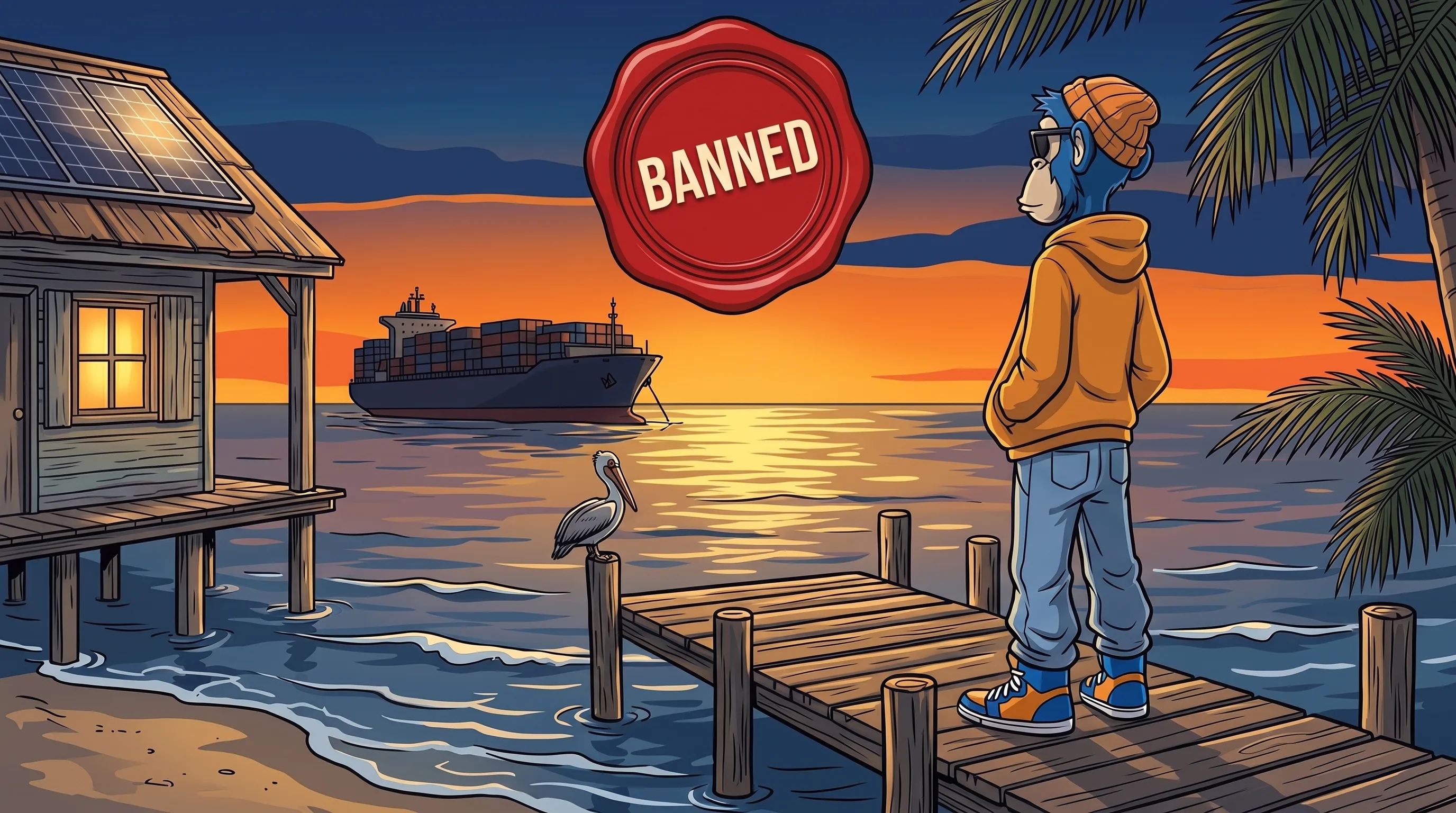
The headline sounds like a shutdown. "FCC bans foreign solar inverters. Grid lockout begins today." If you have a system on your roof, or a pallet of gear in the garage waiting for a free weekend, that reads like a problem with your name on it.
It isn't. This rule does not touch your inverter. I spent the morning reading the FCC's actual documents (the fact sheet, the public notice, and the FAQ posted with them) so you don't have to, and the facts are a lot calmer than the coverage.
What actually happened
On July 28 the FCC added foreign-produced power inverters to its Covered List, the list of equipment the government considers a national security risk. The FCC didn't decide this on its own. A group of national security agencies convened by the White House made the determination the day before, and the law requires the FCC to carry it out. The rule is country neutral. It covers any connected inverter built outside the United States, no matter who owns the brand. An American brand manufactured overseas is covered. A foreign brand assembled in a US factory can qualify as domestic, but only if enough of the component value is American under the federal Buy American standard. Assembly alone doesn't do it.
The ban stops new foreign-built inverter models from getting the FCC equipment authorization that most electronic devices need before they can be imported, marketed, or sold here. New models, going forward, unless the maker gets an approval I'll explain in a minute. That is the whole mechanism. The FCC's own FAQ spells out what does not change:
- Every model already authorized keeps its authorization. Retailers keep importing and selling those exact models, including fresh inventory.
- Installed systems are untouched. The FCC put this one in bold: "This action does not affect any previously purchased devices."
- The rule allows updates to continue. The FCC issued a waiver specifically so these devices can keep receiving basic software and firmware updates.
The EG4 inverters we sell are built overseas, so this rule is aimed squarely at the kind of gear we handle every day. Here is where that lands: every inverter model we stock today already holds its FCC authorization, so it keeps selling, and nothing in the rule reaches the ones already on customers' walls. What the rule actually reaches is the next model, the one that hasn't been authorized yet.
Why they did it
The government's worry is connectivity. A modern hybrid inverter is a computer with a radio in it, and by the government's own estimate more than 46 gigawatts of power on the US grid runs through inverters. The security agencies' determination says a foreign firm could use that connection to shut inverters down or pull data out. That fear has one foot in a real event: after a business dispute in late 2024, a foreign manufacturer remotely disabled its own inverters in the US and several other countries. Security researchers also reported 46 flaws across three major inverter makers last year. The determination stacks more on the pile, from supply chain gaps to how fast inverter-based power is growing, and it leans on one market fact: as of 2020, only about 7% of US inverter shipments came from US-headquartered companies.
Honesty cuts both ways, so here is the other side. The Department of Energy inspected 30 Chinese inverters in January and found no evidence of malicious hardware in any of them. The government's case is about what a connected device could be made to do, and about who controls the supply chain. Whether you find that case convincing is your call. Either way, it is now the rule.
One detail worth knowing: the definition only reaches inverters with remote communication (Wi-Fi, cellular, Bluetooth). Microinverters, string inverters, and hybrid battery-based units are all included when they connect. The connectivity is the trigger, because the connectivity is the threat the agencies named.
What happens next
There is a path back in. A manufacturer can apply for a Conditional Approval (the application goes to the FCC, which hands it to Homeland Security or the Department of War for review), and an approved maker can keep getting new models authorized. The determination calls this a transition period, time for producers to meet the new standards. My bet, and it is only my bet, is that the big names file fast, because the US market is too large to walk away from. The FCC says it will post every approval it grants on its website, so the list will be public.
Day one coverage focused on the big end of the market. The EIA expected more than 58,000 megawatts of solar and storage to connect in the next 12 months, and the trade press spent day one warning about frozen procurement pipelines on utility projects. What this does to residential supply and prices over time, nobody knows yet, including me. We'll watch it and say what we see.
What this means for you
If the parts on your list are current models that already hold FCC authorization (everything we stock does), nothing about this rule changes your build. A brand-new model that was supposed to launch later this year is the thing that may now be stuck waiting on an approval. And to be clear about the boundary: this is an equipment rule about what can be sold in the US. Your utility's interconnection paperwork is a separate process, same as it was last week.
The shop is stocked with current models, and the system builder picks from that same catalog. If you're mid-project and want to double check a part, message the shop with the model number and we'll look up its FCC ID with you.